Why Proper Irrigation Matters for Commercial Properties
February 9, 2026
Managing a commercial property means balancing aesthetics, functionality and budget. Your landscape is often the first thing visitors see. It speaks to the professionalism of the business inside. Irrigation systems are the silent engines behind lush lawns and thriving flower beds.
Many property managers view watering as a simple utility cost. However, viewing it through the lens of asset management reveals a different story. Poor irrigation wastes water, threatens landscaping and can even create liability issues.
Take the first step toward a more efficient, attractive property. Learn why proper irrigation matters, which system is best for your property and why professional oversight is critical.
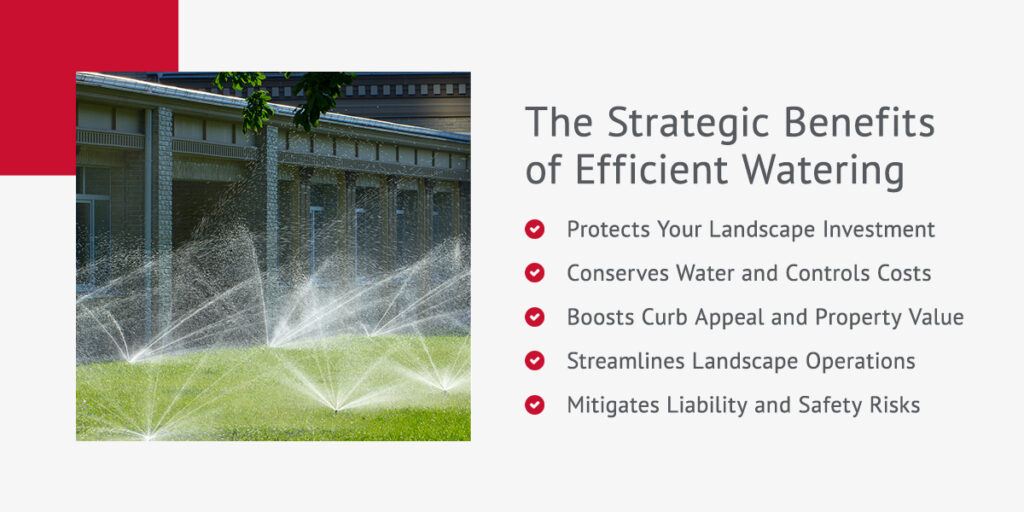
The Strategic Benefits of Efficient Watering
Irrigation is a strategic operational decision that impacts your bottom line and your risk profile. Adopting the proper irrigation methods changes water from a variable expense into a controlled asset.
1. Protects Your Landscape Investment
Commercial landscaping is a significant capital investment. Trees, shrubs and expansive turf areas represent thousands of dollars in value. The cost of replacing plants that die due to drought or overwatering can exceed the cost of maintaining a quality irrigation system.
Consistent watering strengthens plant root systems. This resilience helps your landscape survive the extreme temperature fluctuations in Michigan.
2. Conserves Water and Controls Costs
Water is a controllable operating expense. According to the EPA, outdoor water use accounts for between 5% and 30% of a commercial facility’s water use. A “set it and forget it” approach can lead to thousands of gallons of wasted water per season.
Modern irrigation solutions ensure plants receive the right amount of water at the right time. With smart controllers and proper calibration, every drop delivers value. This approach reduces utility bills. It also demonstrates a commitment to sustainability, which conscious tenants and stakeholders appreciate.
3. Boosts Curb Appeal and Property Value
A lush, green landscape acts as an ever-present ambassador for your business. It creates an immediate positive impression, showing clients, visitors and tenants that you manage the property with care and attention to detail. This visual appeal enhances reputation while driving financial gains. A thriving, well-irrigated exterior boosts perceived property value, helping attract equity partners and improve tenant retention in a competitive market.
4. Streamlines Landscape Operations
Time is a finite resource for property managers. A properly designed irrigation system automates the complex task of watering, freeing your facilities team from the burden of manual labor or constant monitoring. An automated system supported by professional maintenance frees your staff to focus on core building operations and tenant needs. This operational efficiency translates into labor cost savings.
5. Mitigates Liability and Safety Risks
Improper irrigation design can harm plant health, the environment and even people. Investing in professional design and setup can avoid these potential hazards:
- Public safety: Faulty backflow devices can lead to freshwater pollution. They need regular inspections and maintenance to ensure reliable operation. Systems that spray onto walkways or parking lots create slip-and-fall hazards. In winter, overspray can freeze on concrete surfaces overnight, creating dangerous ice.
- Environmental impact: Poorly designed systems waste freshwater resources. Over-irrigation leaches nutrients from the soil, causing water quality to deteriorate and contaminating ground or surface water.
- Plant health: Underwatering can stunt growth or cause plants to wilt and die. Overwatering may result in fungal diseases, root rot or nutrient leaching. Uneven irrigation could result in an imbalanced landscape, with some areas thriving while other areas fail.
A well-designed system minimizes liability risks for property owners.
Selecting the Right Irrigation System for Your Commercial Property
Commercial landscapes require tailored irrigation solutions. A sprawling corporate campus has different needs than a retail strip with narrow planting beds. Choosing the right system achieves healthy lawn irrigation without waste.
Sprinkler Irrigation Techniques
Sprinkler systems remain popular for large, open turf areas. They distribute water through pipes and heads. Effective sprinkler irrigation relies on head-to-head coverage, where the spray from one sprinkler reaches the base of the adjacent sprinkler.
Types of sprinkler heads include:
- Rotor heads: The rotating heads deliver water over broad areas and long distances.
- Spray heads: These heads suit smaller areas and shorter distances.
Drip Irrigation
Drip or micro-irrigation is an efficient solution that supplies water straight to plant roots. It uses a system of tubes, emitters and valves for precise watering. Surface drip irrigation sits on top of the soil, while subsurface irrigation uses buried underground drip lines.
This technique is ideal for flower beds, containers, shrubs or any plants that need targeted watering. It reduces water waste from evaporation and runoff.
Surface Irrigation Services
Surface irrigation is the oldest and simplest method of watering crops. Instead of using sprinklers or complex machinery, it relies on gravity to move water across a large area. It works like letting water run down a sloping driveway. Water flows from the high end of a field over the surface, soaking into the soil to reach the plant roots as it moves.
This form of irrigation is less efficient than other methods because water can evaporate or run off before the plants use it.
Smart Irrigation
Smart irrigation controllers are the new standard for commercial properties. These devices use local weather data and soil moisture sensors to adjust watering times automatically. If rain is in the forecast, the system waits. If a heat wave hits, the system adds a cycle. This automation creates a sustainable watering schedule that reacts to real-time conditions.
A smart system monitors usage, detects leaks and notifies you of potential problems. It conserves water, leading to significant savings.
Seasonal Irrigation Management for the Michigan Climate
Irrigation systems need year-round adjustments to keep up with seasonal demands. We do not have the luxury of running systems throughout the year. The freeze-thaw cycle mandates a rigorous seasonal protocol to prevent catastrophic damage:
- Spring startup: A professional startup involves a zone-by-zone inspection. The winter freeze can shift soil and pipes, causing heads to misalign or fittings to crack. During startup, technicians adjust heads to ensure they are upright and directing water away from hardscape elements. They also check for “geysers” or leaks that may have developed over the winter. This initial calibration sets the baseline for a successful season.
- Midseason monitoring: A schedule that works in the cool, wet weeks of May will fail during the hot, dry days of July. Midseason monitoring ensures your system ramps up during peak heat and scales back as autumn nears.
- Critical winterization: A pre-winter irrigation line blowout is an essential service for Michigan irrigation systems. Water left in pipes or valves can freeze and expand, leading to expensive repairs in the spring. During a blowout, technicians use an air compressor to force water out of sprinkler pipes.
Why Professional Design and Maintenance Is Nonnegotiable
Commercial irrigation is complex. It involves hydraulics, electrical systems and technical expertise. Relying on a general maintenance person or a DIY approach often leads to inefficiencies that cost more in the long run.
Professional landscaping and irrigation services offer the following advantages:
Expert Zone Design
Plants, flowers, turf grass and trees all have different watering needs. A professional design uses hydrozoning to group plants with similar water needs into the same zone. Hydrozoning avoids overwatering or underwatering.
Proactive Issue Detection
A slow leak underground can run for months before it surfaces, causing water bills to skyrocket. Professional landscape management services include routine checks during mowing or maintenance visits. Trained eyes can detect wet spots, dry patches or damaged sprinkler heads early. Fixing a small leak today prevents a sinkhole or a massive utility bill next month.
Long-Term System Longevity
An irrigation system is a mechanical asset. Like an HVAC system, it requires maintenance to perform at its peak. Regular inspections, calibration and cleaning extend the life of the hardware. Professional care ensures you get the maximum return on your installation investment.
Partner With DJ’s Landscape Management for Smarter Irrigation
Proper irrigation protects your landscape, property value and budget. DJ’s Landscape Management has provided expert commercial irrigation services for over 30 years. As Michigan locals with locations across the state, we tailor solutions to the Great Lakes State’s specific climate. Your landscape remains lush, safe and cost-effective year-round.
Our comprehensive services include system setup, shutdown, preventive maintenance and precise repairs. From single sites to multiple properties, our team can handle it all.
Take control of your water management strategy today. Get in touch to schedule a property assessment.