Landscaping Trends: What’s In vs. What’s Out for 2026
December 23, 2025
In 2026, lawn care trends reflect a move toward prioritizing sustainability goals, improving usability and strengthening the overall property experience. A major force behind these shifts is the growing reliance on smart technology and the need for greener, people-focused designs that reduce water waste, streamline maintenance and create more functional, intentional spaces.
With commercial landscapes increasingly viewed as extensions of the workplace — places for collaboration, wellness and client impressions — they must now balance aesthetics with purpose. The properties that stay aligned with the most relevant trends in the lawn care industry will see success. Let’s look at what’s in vs. what’s out for 2026.
Out: High-Maintenance Lawns and Annuals
Some traditional landscaping choices are falling out of favor, particularly resource-heavy lawns and seasonal flower beds that need constant upkeep.
Resource-Intensive Grass
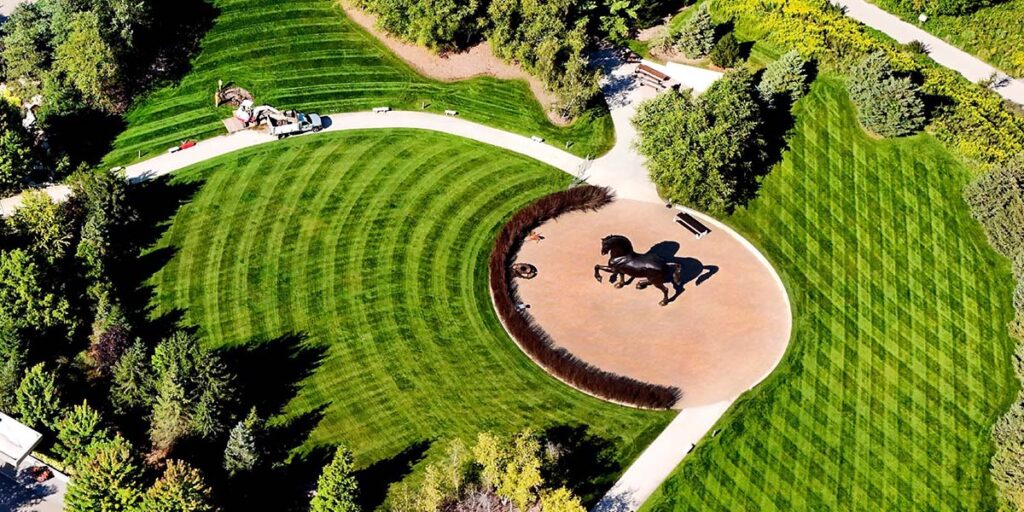
Large expanses of pristine turfgrass may look clean, but they offer little functional value for most commercial properties. They require frequent mowing, considerable water use, ongoing fertilization and constant monitoring to stay healthy, leading to high operational and labor costs. As water conservation and cost control become increasingly important priorities, the traditional “endless lawn” approach is no longer viable for modern landscapes.
Short-Lived Annual Flower Beds
Seasonal annuals deliver quick color, but they don’t last. Replacing them multiple times a year is expensive and creates significant plant waste. Compared to perennial and native plants, annual beds offer fewer ecological benefits to biodiversity and pollinator support. They’re being replaced by more sustainable, long-lasting planting designs that provide beauty with much lower resource consumption.
In: Climate-Resilient Native Plantings
Commercial landscapes are increasingly embracing plant palettes designed to thrive with fewer inputs. This is one of the strongest sustainable landscaping trends shaping 2026.
Native and climate-adapted plants offer a modern, high-performance alternative to traditional turf and single-season designs. These species are built for local conditions, making them more resilient, self-sufficient and environmentally supportive.
Reduced Water and Maintenance
Plants that are naturally adapted to the local climate require less ongoing intervention. They need significantly less irrigation, fewer fertilizers and minimal pest control compared to non-native or water-sensitive species. There’s a growing preference for eco-friendly, low-maintenance landscapes that reduce long-term operating costs while still looking polished and inviting.
Supporting Local Ecosystems
Native landscapes double as ecological assets. They provide vital resources for pollinators, birds and other wildlife. At hotels, retail centers, business parks and other commercial spaces, the landscape can actively strengthen the surrounding ecosystem. It’s a simple, high-value way to make your property more environmentally responsible.
Out: Rigid and Formal Landscape Designs
Overly manicured, highly structured landscapes are declining in popularity. These designs often rely on perfectly shaped hedges, repetitive plant blocks and strict symmetry. This aesthetic can feel dated or uninviting.
They also require more maintenance and replacements, which creates higher long-term costs. Modern properties are moving away from these rigid styles in favor of landscapes that feel more natural, expressive and connected to their surroundings.
Contemporary commercial design embraces color, texture and plant variety to create energizing and welcoming outdoor spaces — landscapes that evoke a connection to nature rather than controlling it.
In: Naturalistic Designs and Multifunctional Spaces
As preferences shift away from traditional formality, properties are embracing modern landscaping elements rooted in naturalistic style. High-maintenance planting is no longer the expectation. Instead, commercial landscapes are trending toward organic, immersive and functional designs.
Creating Immersive Environments
Layered grasses, native perennials, flowering shrubs and meadow-like plantings create a more vibrant and organic landscape. These diverse compositions add depth throughout the year, showcasing seasonal changes in color and texture that more rigid designs can’t replicate. They also support greater biodiversity and reduce the need for intensive pruning or frequent replanting.
Designing for People and Purpose
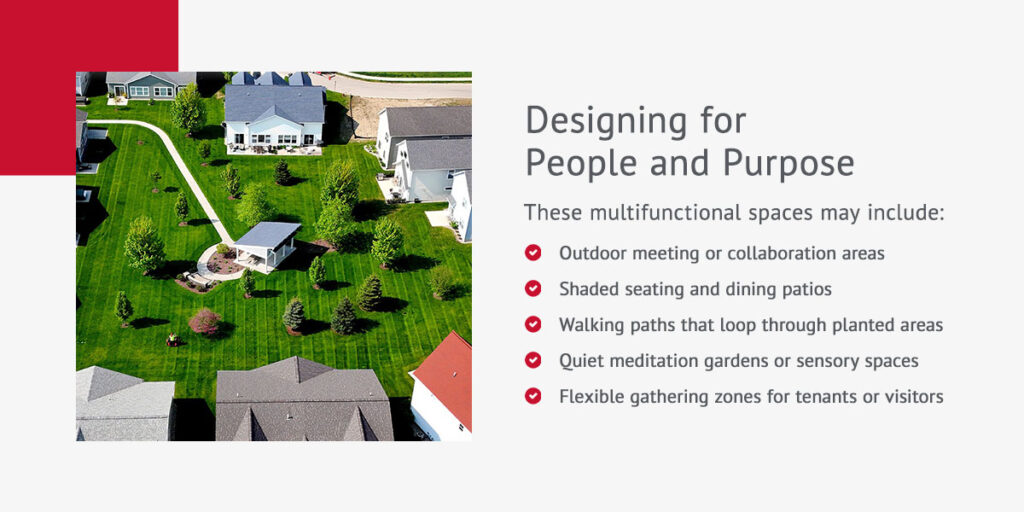
Commercial properties are increasingly incorporating outdoor “rooms” that prioritize the human experience. These multifunctional spaces may include:
- Outdoor meeting or collaboration areas: These areas give employees a refreshing alternative to indoor conference rooms, fostering creativity and productivity while encouraging teams to spend more time outside.
- Shaded seating and dining patios: Comfortable, protected seating areas allow staff and visitors to enjoy lunch breaks, informal meetings or quiet work sessions outdoors.
- Walking paths that loop through planted areas: Curated pathways encourage movement throughout the property. People are guided through the landscape, and the grounds have an inviting, interactive feel.
- Quiet meditation gardens or sensory spaces: These restorative corners provide a calm atmosphere where individuals can pause, decompress and enjoy the subtle scents and sounds of the environment.
- Flexible gathering zones for tenants or visitors: Open, adaptable spaces support everything from casual socializing to community activities. Properties can better accommodate evolving tenant and guest needs.
In: Smart Technology Integration
Innovation is reshaping landscape management. Technology gives teams far more control over efficiency, resource use and long-term operating costs. Here’s how tech-enabled landscapes allow teams to work smarter and deliver consistent results with fewer inputs:
Smart Irrigation Systems
Irrigation tools are designed to think ahead. Weather-based controllers automatically adjust schedules based on incoming storms or temperature shifts, and soil sensors gauge moisture levels beneath the surface to determine whether water is actually needed.
This level of precision prevents unnecessary irrigation and protects plants from overwatering. Integrating smart irrigation systems can help cut water use, lowering utility bills while keeping plant health stable. Remote management also lets teams monitor performance and make quick adjustments without physically visiting each zone.
Low-Voltage Landscape Lighting
Energy-efficient landscape lighting is gaining ground. LED systems use far less energy, last longer and provide clean, even illumination that improves safety after dark. With clear, consistent lighting, you can improve visibility along walkways, entry points and parking areas. Modern lighting also enhances nighttime aesthetics by highlighting details and signage to elevate the property’s overall look.
Modernize Your Commercial Landscape
The future of commercial landscaping is sustainable, functional and thoughtfully integrated. By embracing these 2026 landscaping trends, property managers can reduce maintenance strain and create striking outdoor environments that truly support the needs of employees, tenants and visitors.
At DJ’s Landscape Management, we specialize in installing and maintaining landscapes for commercial properties across Michigan. Our team can help your property stay current by modernizing planting beds, implementing smart technology or transitioning to low-maintenance, climate-resilient designs.
Learn more about how you can transform your outdoor space with our landscape construction services and get in touch with our team today.