The ROI of Commercial Landscaping: How to Measure Property Value Impact and Budget Effectively
October 29, 2026
As a commercial property manager or owner, you face pressure to justify landscaping spend to leadership, boards and your own bottom line. Rather than vague promises of curb appeal, you need evidence that connects grounds care to asset performance. Landscaping return on investment (ROI) shows in higher property values, stronger tenant retention and lower long-term maintenance costs.
Get the evidence you need to make a confident decision and support commercial landscape budget planning.
What Counts as Commercial Landscaping ROI?
Determining landscaping ROI is more complex than a direct dollar-to-dollar comparison. For property managers, the value often shows up in stronger lease appeal, safer access points and more predictable annual spending.
Some returns are easier to track. Less water waste, lower plant replacement needs and fewer urgent service calls point to more efficient property care. Other returns are harder to measure but contribute to ROI. Clean entrances, healthy turf and maintained plant beds help the property build trust before tenants, visitors or employees step inside.
These benefits contribute to property performance as well as appearance. When grounds care helps protect asset value, reduce risk and support tenant satisfaction, it becomes easier to defend in budget conversations.
Commercial Landscaping for Increased Property Value
A cracked walkway or overgrown hedges can undercut a top-tier building as quickly as a stained lobby carpet. Well-kept grounds send a different message. They strengthen visual appeal, reinforce a professional image and improve safety on-site. Over time, those details shape perceived property value. In competitive markets where multiple buildings compete for the same tenants, standout landscaping becomes a differentiator. It could be the tipping point between an available unit and a leased one.
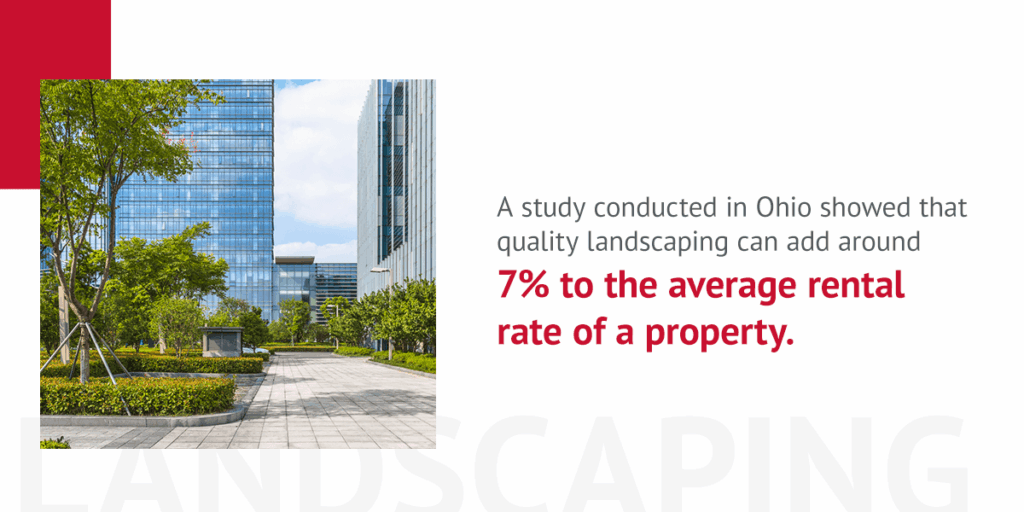
The financial upside is measurable. A study conducted in Ohio showed that quality landscaping can add around 7% to the average rental rate of a property. That number strengthens the case for commercial landscaping ROI, turning grounds care into a strategic financial choice instead of a place to cut costs.
Impact of Landscaping on Tenant Retention and Satisfaction
Studies show that a one-point increase in tenant satisfaction correlates with an 8.6% higher chance of lease renewal. Satisfaction is often linked to the condition of the premises. If the building looks tidy, feels safe and comes across as well-managed, tenants are more likely to stay.
Maintained grounds contribute to tenant happiness in these ways:
- Signals management quality: Mowed lawns, shaped shrubs, snow-free lots and healthy plants reflect proactive, attentive property care.
- Drives measurable returns: Tenant satisfaction with a building impacts rental growth. A 10% improvement in building satisfaction can lead to 0.9% higher growth in effective gross rent and a 0.3% reduction in vacancy rates.
- Improves safety: Commercial landscapers address issues like icy walkways, broken tree branches or cracked paving that can create safety risks.
- Builds property pride: A polished exterior gives tenants confidence when employees, customers and clients arrive on-site.
The impact can look different depending on the property type. Office buildings may benefit from maintained entrances and outdoor gathering areas that support a professional environment. Clean walkways with trimmed plant beds help create a better customer experience at retail centers. For business parks or industrial facilities, consistent grounds care can reinforce order, safety and reliability.
Ways That Commercial Landscape Management Protects Your Budget
Ongoing landscaping services can lower costs in these practical ways, allowing you to plan your budget with greater accuracy.
Proactive Landscape Care vs. Reactive Repairs
Deferring maintenance may lower this month’s spend, but it can shift costs into emergency repairs, replacement plantings and safety concerns later. Without routine irrigation checks, turf may decline while water waste goes unnoticed. Delayed pruning can turn diseased or damaged tree branches into safety concerns. Failing to address drainage or hardscape problems can affect walkways, parking areas and the overall property experience.
A proactive approach gives you control, shifting the focus from visible problems to planned care. It allows managers to organize services around seasonal needs, routine intervals or known property priorities. That structure makes landscaping spend easier to explain because each line item ties to prevention, safety, tenant experience or long-term cost control.
Strategic Seasonal Savings
Budget protection also depends on timing, because commercial properties have different needs in every season. Spring often starts with cleanup, turf recovery, planting and irrigation startup. In summer, lawn care combined with irrigation adjustments reduces water waste while keeping plants healthy. Fall services prepare lawns and gardens for winter dormancy through core aeration, overseeding, leaf removal and fertilization. Snow and ice management takes priority in winter, helping keep the property accessible and safe.
Coordinating these services gives property managers overseeing multiple sites a clearer way to plan. It also separates routine upkeep from one-time improvements. With a structured plan in place, teams can prioritize urgent needs and reduce surprise expenses. Leadership gets a clearer view of the budget, including how each service supports property performance throughout the year.
Which Commercial Landscaping Services Create the Most Value?
The highest-value landscaping investments protect both appearance and function. For commercial properties, that often means building a customized plan around ongoing care.
These professional landscaping services can contribute significant long-term value:
- Landscape management: A well-rounded maintenance program keeps the premises looking cohesive, from plant beds and green spaces to high-visibility entrances.
- Plant healthcare: Professional care can protect established trees, shrubs and plantings from preventable decline, avoiding costly replacement.
- Lawn maintenance: Turf areas need consistent attention because tenants, employees and visitors see them every day. Healthy, trimmed grass supports a cleaner, more professional property.
- Irrigation: Outdoor irrigation makes up between 5% and 30% of a commercial facility’s water use. A well-managed system helps prevent overwatering while conserving resources and lowering utility costs.
- Snow and ice management: These services keep buildings accessible, enhance safety and lower liability risks.
- Landscape enhancements: Walkways, drainage improvements, retaining walls and patios make outdoor areas more functional. These improvements can strengthen long-term property value.
How to Measure Commercial Landscaping ROI
Track these metrics to connect landscape spending to balance sheet outcomes:
- Lease renewal rate: This metric shows how many tenants renew their leases each cycle. Watch for shifts after major grounds improvements or signs of property decline.
- Days vacant per available space: Faster turnaround between tenants often points to a property that makes a strong first impression, landscaping included.
- Tenant satisfaction: Look at feedback or complaints tied to grounds and property management. Tenant satisfaction scores predict renewal intent, so tracking them quarterly gives property managers an early warning system before a lease expires.
- Maintenance cost per square foot: Separating routine spend from emergency costs can show whether proactive landscape care reduces surprise expenses over time.
- Rent growth tied to property improvements: Rent trends before and after landscaping upgrades can help show the return in dollar terms.
To make these metrics useful, establish a baseline before major landscape improvements or service changes. Then review trends quarterly to see whether grounds care is influencing leasing, maintenance costs or tenant satisfaction.
For budget conversations, pair cost data with performance indicators. Routine maintenance costs may increase after introducing a proactive plan, but emergency repairs, plant replacement or tenant complaints may decrease. The comparison makes it easier to justify landscaping as a long-term investment instead of a discretionary expense.
Increase Your Commercial Property ROI With DJ’s Landscape Management
Turn your grounds into a measurable business asset. For over 30 years, DJ’s Landscape Management has helped our customers get more from their outdoor spaces. Our commercial landscaping services help add property value, strengthen tenant retention and make budget planning more predictable.
We support you through every season with local crews and a dedicated account manager. Whether you need ongoing lawn care, seasonal solutions or expert hardscape installation, you have one team helping you plan ahead. With nine locations across Michigan and three in the Twin Cities, we’re just down the road when you need us.
Let’s build a landscaping plan that protects your property, supports your tenants and makes your budget easier to defend. Reach out to get started today.